Plastic Free South Australia Project Launch
On Saturday 14th December 2019. Hon. David Speirs MP, Minister for Environment and Water, launched the Plastic Free SA project.
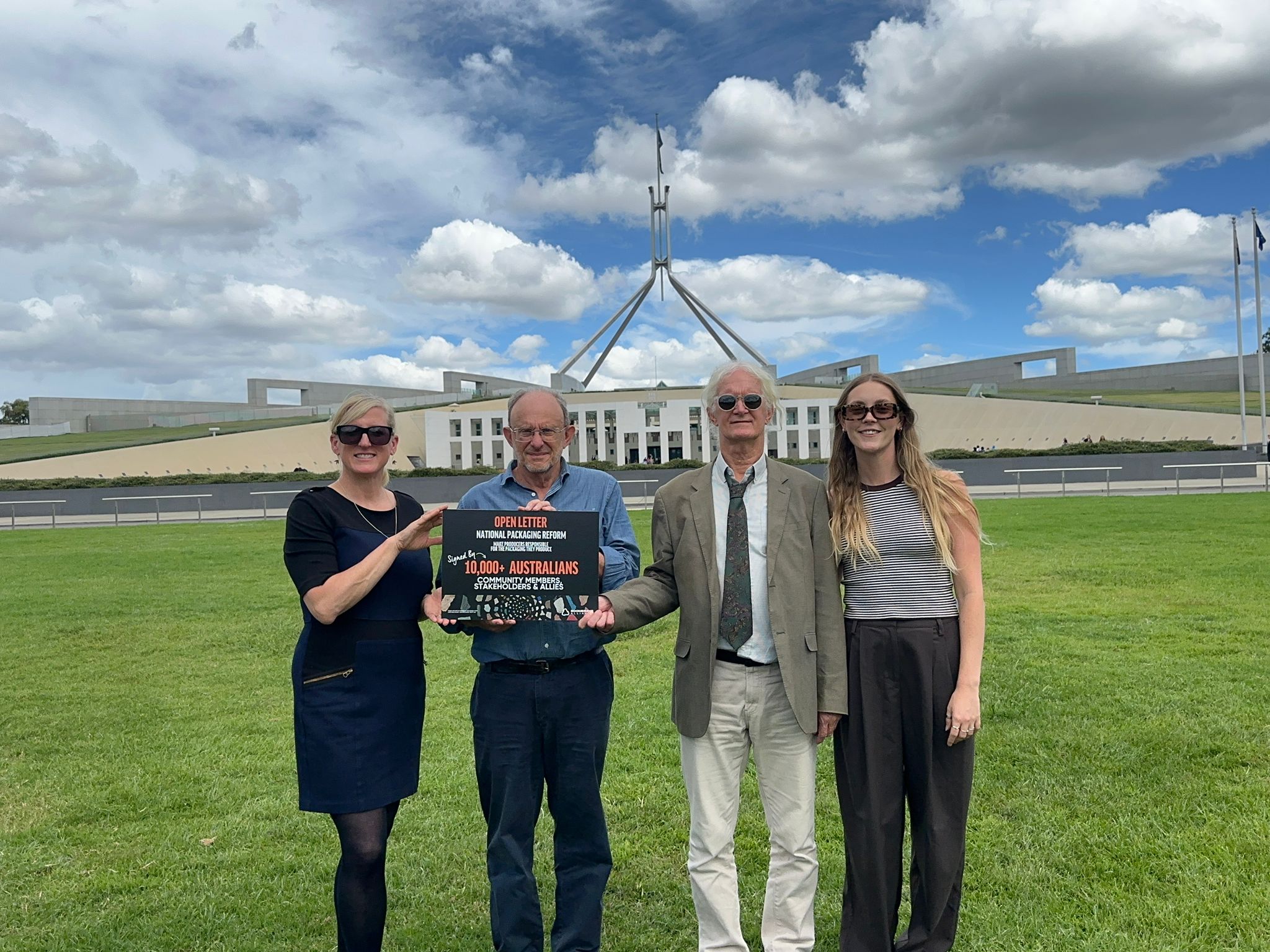
At the launch, South Australia’s first 'Plastic Free Champion' Brick + Mortar Creative, was identified using the Boomerang Alliance's Plastic Free Places guidelines. On hand with the Minister was Boomerang Alliance Director, Jeff Angel, Taryn Hansen, Plastic Free SA Coordinator and Elizabeth Donaldson, Brick + Mortar Creative Director.
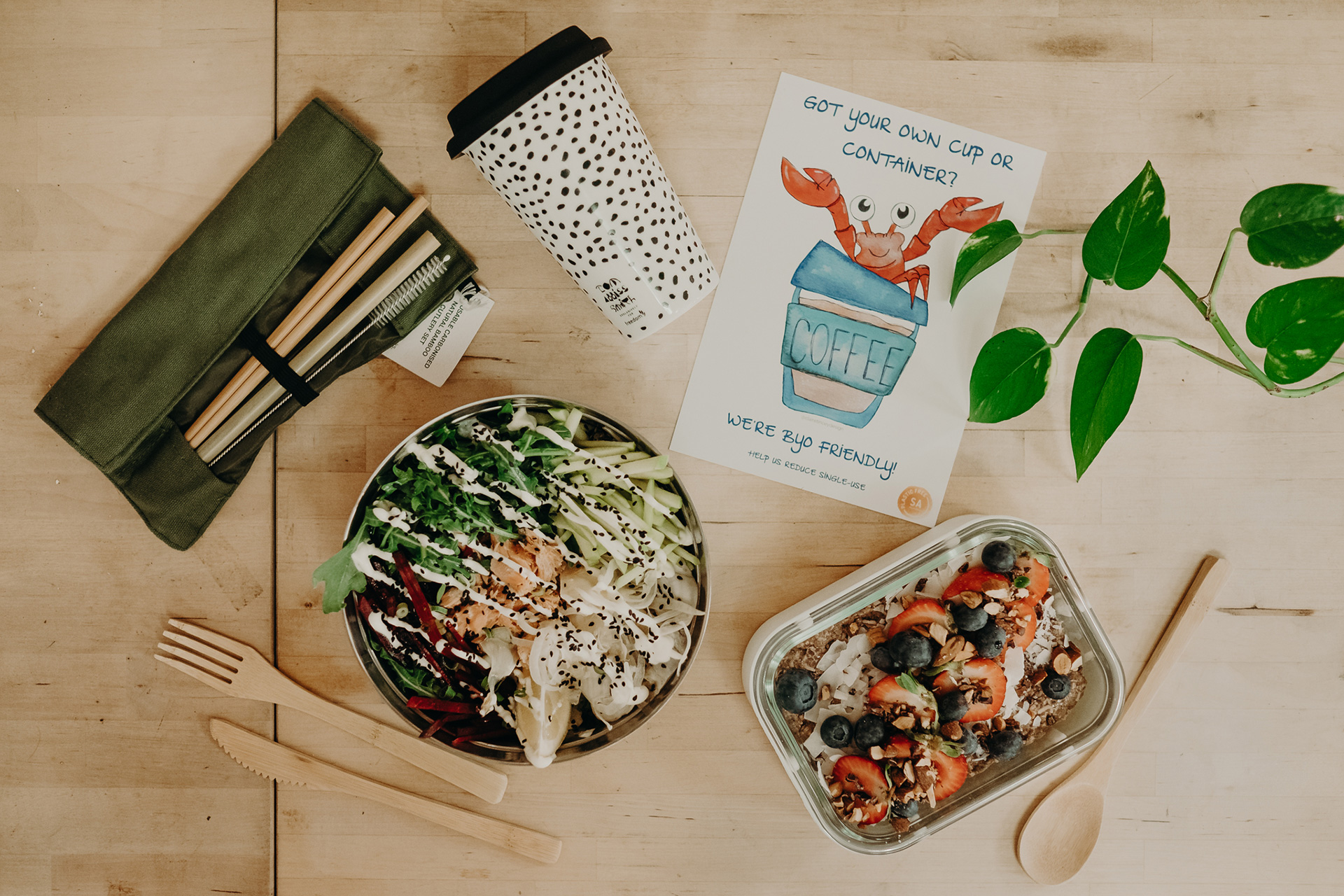
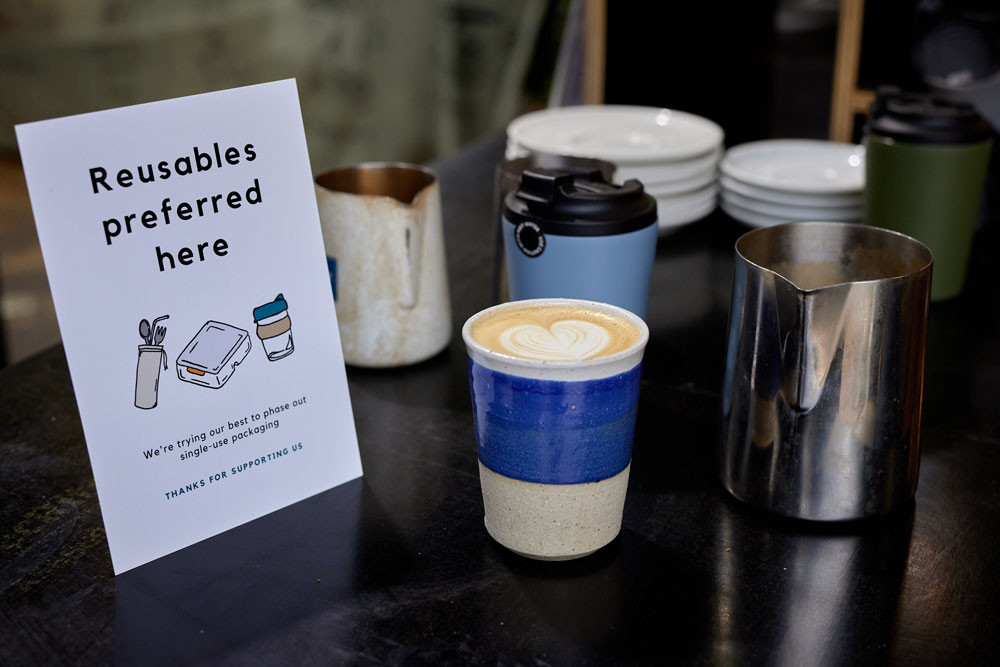
Plastic Free Champions are those cafes who have eliminated plastic coffee cups/lids, straws, foodware (cutlery, cups etc), takeaway containers, thick plastic bags and plastic water bottles. They provide reusable foodware instead, and where they can’t, 100% certified compostable packaging.
The Minister also took the opportunity to release the draft Single-use and Other Plastic Products (Waste Avoidance) Bill 2019 for public comment. This proposes a ban on plastic straws, stirrers and cutlery and certain other single use plastics in South Australia. Comments are sought by 7 February 2020.
https://www.greenindustries.sa.gov.au/plastics
Download the media release from Hon David Speirs MP, Minister for Environment and Water
Read moreQueensland Steps Up on Phase-out of Single-Use Plastics

We welcome the announcement today (November 7, 2019) by the Queensland Government on a new Plastic Pollution Reduction Plan, which includes legislation next year (subject to consultation) to ban the supply of plastic products including plastic straws, cutlery, plates and stirrers, possibly extending to include coffee cups, plastic cups and heavy-weight shopping bags. The plan also includes further investment on plastic recovery and recycling.
Our Plastic Free Places Program features in the plan, with the Government proposing to partner with us to expand the program to further communities across Queensland, and to promote and deliver it nationally based on knowledge and experience gained in our pilot community Plastic Free Noosa.
This announcement comes ahead of the national Meeting of Environment Ministers (MEM) taking place on November 8 in Adelaide. Plastic reduction will be a hot topic on the agenda, with both South Australia and Queensland preparing legislation on single-use plastic take-aways. We hope other jurisdictions will follow suit!
Click here to access the full plan.
Our official Media Release can be found here.
Queensland Steps Up on Phase-out of Single-Use Plastics
The Boomerang Alliance today welcomed the Queensland Government’s Plastic Pollution Reduction Strategy which includes a proposed ban on single-use takeaway plastics. These are the takeaway plastic items commonly found littered in Queensland, including plastic straws, stirrers, plates, cutlery, coffee cups and heavyweight plastic bags.
‘Queensland, once one of the most littered states in Australia and is acting with determination to address its plastic pollution problems, building on the plastic bag ban and popular container deposit scheme.’ said Toby Hutcheon, QLD Manager of the Boomerang Alliance, which represents 49 community organisations concerned with waste and plastic pollution.
‘Now Queensland and South Australia are preparing legislation on single-use plastic take-aways - we encourage other jurisdictions to follow suit,’
‘With the national Meeting of Environment Ministers (MEM) taking place tomorrow (8 November) in Adelaide - there is a perfect opportunity for a joint attack on plastic pollution.’
The Queensland Government intends to introduce enabling legislation in 2020 (subject to a regulatory impact statement) to ban the supply of straws, stirrers, plates and cutlery and, following further analysis, coffee and other cups and heavyweight plastic bags.
‘Boomerang Alliance is calling on the government to ensure that the proposed ban on all these identified products is enacted in the next 12 months to avoid more plastic waste and more littering of the environment.’
‘Our Plastic Free Places program which helps cafes, markets, events and festivals transition to the preferred reusable or 100% compostable alternatives is proof these products are readily available and acceptable to consumers and business,’ said Hutcheon.
Queensland Government research shows that 7 out of 10 Queenslanders are taking steps to reduce their plastic use when away from home.
‘The public dislike excessive plastic packaging and plastic litter. They are looking for solutions. This Queensland Government ban, supported by the food and hospitality sector, will make the difference the public are looking for.’
‘Single-use takeaway plastic items are the second most common litter type after cigarette butts. The latest Clean Up Australia Rubbish report for Queensland found that 36% of litter collected was takeaway packaging.
The Plastic Free Places program, with funding support from the Queensland Government, is demonstrating that the hospitality sector wants to do the right thing and be part of the solution to plastic waste and litter.
The Plastic Free Noosa project, one of five current projects operating in Australia, has over 200 member businesses and has eliminated or replaced over 3 million single use plastic items. This includes over 1 million straws, 280,000 coffee cups, over 750,000 containers and cups and 260,000 pieces of plastic cutlery. All this in one place in under 18 months.
The Plastic Free Places program will be expanded into Townsville and Cairns in 2020.
The Boomerang Alliance, in partnership with the Australian Packaging Covenant Organisation (APCO) plans to expand the program across Australia and make it accessible to all interested communities.
Cairns And Townsville Become 'Plastic Free Places' To Try Save The Reef
The Great Barrier Reef is not only one of the wonders of the natural world, it supports 64,000 jobs in Queensland. But that natural wonder is under serious threat, not just from climate change, but also from plastic pollution.
Read moreMEM 2019: Boomerang Alliance Letter of Recommendation to the Environment Ministers
Australia's environment ministers will be meeting in early November to agree on an action plan and Boomerang Alliance sent a letter of recommendations to the ministers.
Read moreCouncil Plastic Free Event Guide Released
The Boomerang Alliance has released a comprehensive guide (The Boomerang Alliance Plastic Free Council Event Guide) to provide councils with advice on how to reduce plastic use as part of tackling plastic pollution.
The guide is also available to any event organisers who wish to adopt plastic-free policies.
The Guide is based on practical experience and intended to assist councils to adopt policies to manage single-use plastic phase-outs from their events. Or, for councils who have already adopted plastic free event policies, additional ideas to go further. It is endorsed by the Queensland Local Government Association and Minister for Environment.
'Plastic coffee cups/lids, straws, bags, cups and food containers, cutlery and water bottles are routinely used at public events and are also amongst the most common litter items,' said Toby Hutcheon, QLD Manager of the Boomerang Alliance.
'Events are controlled spaces so by eliminating the use of these single use plastics in favour of reusable or 100% compostable items, events can reduce their plastic footprint and slash their plastic waste.'
'Eliminating the use of these plastic products is an important way to achieve less litter to waterways and the ocean, less wasted resources and reductions in fossil fuel use.'
The Boomerang Alliance's successful Plastic Free Places (Noosa) Project, funded by the Queensland State Government, Tourism Noosa and Noosa Council has shown what a difference going plastic-free can make. In the last 12 months, the project has eliminated over 3 million single-use plastic items in cafes and at events.
Major events, such as the Noosa Triathlon 2018 removed 180,000 plastic cups from use. The Noosa Food and Wine Festival 2019 went plastic-free and sent 1.3 tonnes of discarded food and food ware to a commercial composter, and not to landfill.
'With the National Waste Policy establishing targets for all packaging to be reusable, compostable or recyclable by 2025, and the Australian Packaging Covenant Organisation (APCO) seeking to have 70% of all packaging either composted or recycled by 2025, the time is right for events to demonstrate that packaging and other event items, can be reused or composted rather than landfilled,' said Hutcheon.
'We are grateful for the assistance of Noosa businesses, community and Council and the support of the LGAQ and Queensland Government in developing the program.'
Key Features promoted for a Plastic Free Event:
- Events are promoted as plastic free to build public awareness
- All vendors provide only reusable or 100% compostable food ware
- Events utilise a refillable cup system at bars and drink outlets
- No helium balloon releases are allowed at the event
- Event organisers are encouraged to provide water refill stations to limit plastic water bottles
- Discarded wastes are collected so they can be recycled or composted rather than landfilled
- Organisers take a continuous improvement approach to reducing plastic wastes. What they can’t do this time, they will arrange next time

The guide and support information on plastic free events is available on the Boomerang Alliance website: www.plasticfreeplaces.org
BA Victorian Campaigner Dr Annett Finger on 3AW Drive
Surely the obvious solution for councils if they want to reduce the amount of rubbish collection is Container Deposit Scheme? Boomerang Alliance campaigner in Victoria, Dr Annett Finger spoke with Nick McCallum on 3AW Drive
Read moreCommonwealth Shining Light on Recycling and Plastic Pollution

The appointment of a new Environment Minister for Waste Reduction and special envoy for the Great Barrier Reef committed to stopping plastic pollution is a ray of hope, a major environmental group said today.
Read moreFed Election 2019: Where the three Key Political Parties stand on Plastics and Recycling

The Boomerang Alliance released a scorecard below on key party recycling and plastic pollution policies and we call for a greater effort on plastic pollution.
While some good progress has been made on growing recycling by the ALP, Liberals and Greens – there are big gaps on plastic pollution reduction from the major parties. We need a comprehensive plastic pollution program backed up by effective and urgent action plans and funding.
Every day that passes, as more and more plastic gets into the ocean, the longer the pollution inheritance for future generations. We are seeking action across a range of fronts within 6 months of the new government taking office. The full suite of tools from bans, alternative products, financial incentives, new collection systems and community and business mobilisation need to be used. There is no time to waste.
Read more
Fed Election 2019: Plastic Pollution - Why helping our Pacific neighbours is important

Many Asian countries are amongst the biggest contributors when it comes to plastic pollution of the Pacific. They include China, Indonesia, the Philippines, Vietnam, Thailand and Sri Lanka.
However, before we rush to condemn, we need to acknowledge that it is the higher income countries like Australia who have the highest per capita plastic use.
The difference is that higher income countries[1] have better services and infrastructure to manage discarded plastics. Nevertheless, it should also be recognised Australia has paid inadequate attention to controlling its plastic litter rate and still has much work to do.
The problem for many other less wealthy countries is because they lack collection and processing infrastructure they cannot adequately deal with so much plastic waste and litter. As a result, that plastic waste ends up in streets and suburbs, getting into waterways and eventually the ocean.

As Australians, it is important that we continue to reduce our plastic use. It is equally important that we assist those countries without our advantages, to clean up and develop better options for recycling the plastics that washes up on their shores from other countries and is generated locally.
It's a sad fact that, whilst most communities use too many disposable plastic products themselves, much of what reaches their shores comes from somewhere else.
The images below from Indonesia illustrate the problem. Communities can clean up their beaches, but what do they do with the plastics they have collected?
They need, and would benefit from investment in community-based recycling services so that as well as instituting local bans on certain items, they can keep cleaning up, then recycle what they collect and make money from selling recycled plastics. This would represent, not a compete answer, but a good start in cleaning up the current crisis.
The more we clean up, the less microplastics in the ocean and the less impact on our region from plastic pollution. Tourism in Pacific countries will also benefit, as the pollution is degrading natural assets.

Photos courtesy of Anya Phelan
Dr Anya Phelan for the UQ Business School has been working with communities in SE Asia to try and resolve their plastic pollution problems. She says, ‘’in SE Asia plastics use has outpaced waste management and infrastructure, and the situation is approaching catastrophic proportions.’’[2]
We in Australia are not immune from overseas-sourced plastic litter. We have our own garbage patch along our coastline, particularly in locations remote from any settlements.

Plastic Litter Hotspots courtesy Tangaroa Blue
On Cape York (FNQ) remote beaches such as Chilli Beach and Cape Bedford are littered with marine plastics. Even as we go to the polls on 18 May, Tangaroa Blue volunteers will be at an annual clean up in the area.

Political parties support Pacific neighbours clean up
The good news at this election is that all the key political parties have promised to act and invest in helping our Pacific neighbours clean up. Funding will also be available for our domestic clean-up programs.
The Coalition has promised $16M and Labor $15m for Pacific litter clean up and plan to include this in Foreign Aid budgets. It is essential that we also support the development of community-based recycling operations. If a community can make money from safely recycling plastics, we ensure that their beaches will be cleaned up as a result.
Australia, with many other nations, has also promised to work with the UN Environment Program on reducing marine plastic debris. The funding for Pacific litter clean ups promised is a small but important step towards solving the problem of marine ocean plastics. We also want to make clear that such help is not short term, and needs to continue over several electoral cycles.
___________________________
[1] What Hans Rosling in his book Factfulness called the economically richer Level 1 countries
[2] Tacking Ocean Pollution UQ Business School media release Jan 2019
Aus Electoral Commission (AEC) voting material posted in ‘greenwashed biodegradable' plastic wrap
A recent mailout to all voters from the Australian Electoral Commission (AEC) has ironically highlighted a key issue that our federal politicians need to address – finding better solutions to our worsening plastic pollution problems.
'In an attempt to reduce the impacts of single-use plastic, the AEC mailout sent to 16 million registered voters was wrapped in a plastic film labelled ‘biodegradable. It’s disappointing the AEC did not look carefully at what it was buying. This plastic packaging is oxo-biodegradable plastic and is not biodegradable in landfill or the environment, as inferred by the manufacturer,' said Jeff Angel director of Boomerang Alliance.

'As a result, the AEC is contributing to even more excessive and unnecessary plastic being used, wasted or littered. Boomerang Alliance suggests that in future the AEC makes greater efforts to check the 'bona fides' of products it uses. Evidence that they are no better has been known for years. We encourage the AEC to strengthen their guidelines with regards to products boasting sustainable assertions.
'Also the DL sized mail out could have been sent without a wrap, with alternative copies available on-line and at outlets like post offices.'
A recent study by the University of Plymouth has shown that so-called oxo-biodegradable plastic bags are nothing but complete greenwash. The study revealed supposedly biodegradable plastic bags still intact after three years spent either at sea or buried underground.
Oxo-biodegradable plastics are conventional fossil-fuel based plastics with an additive that allows them to partially or fully break down but only under certain conditions. Ocean, terrestrial and landfill environments do not meet those conditions.
Marine environments don’t contain the right types of microorganisms needed to break down plastics, and soil and landfill conditions usually lack oxygen which limits the types of microorganisms that can exist there.
Boomerang views this type of greenwashing in all types of plastic consumer packaging, including bags and so-called eco-straws. In many cases it can actually be worse for the environment, as consumers believe it is biodegradable and is thus littered more often.